Crystal Types
Quartz vs. Glass vs. Resin: 9 At-Home Tests to Tell Real Crystals Apart
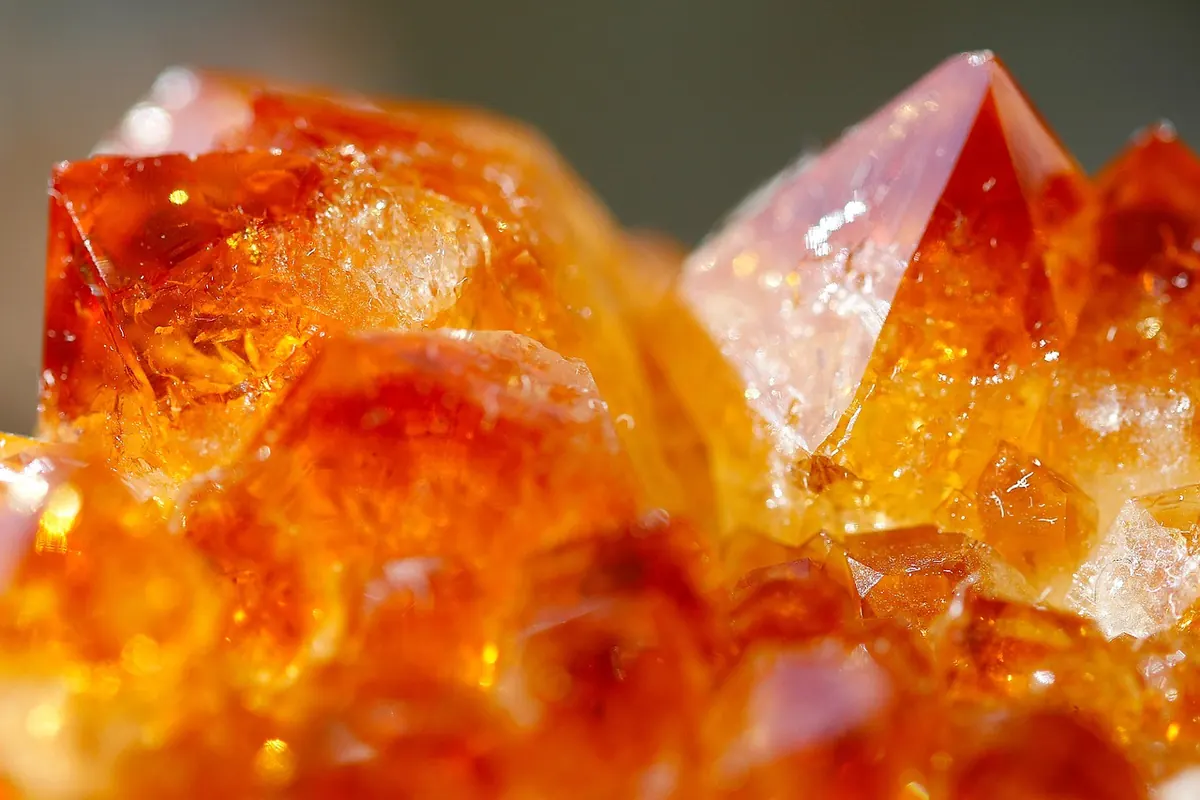
You bring home a quartz point from a market stall, set it on the shelf, and a friend picks it up. "Is this real?" Fair question. Glass and resin have improved to the point where a pretty cluster in a shop window can be a moulded copy, and a clear point on a wooden stand can be sliced from a glass blank. The reassuring part is that most fakes give themselves away quickly—often in the first minute—if you know what to look for.
None of the nine tests below needs a laboratory. A loupe, a steel nail, a glass bottle and a phone torch will do most of the work. Run several together rather than trusting any single one, and stay honest about what each test can and cannot prove.
Before You Start: Ground Rules
Two rules keep you out of trouble. First, anything that scratches, presses or taps can damage a specimen you actually care about, so begin with the gentle tests and stop as soon as the evidence is clear. Second, every test is a clue, not a verdict—a single odd result means little, but three agreeing results mean a great deal.
Have these within reach:
- A 10x jeweller's loupe or a phone macro lens
- An ordinary steel nail (around 5.5 on the Mohs scale)
- A glass bottle you don't mind marking
- A bright lamp or phone torch
- A bowl of water
- One piece of quartz you trust, for comparison
The Temperature and Weight Tests
Test 1: the hand test. Quartz moves heat out of your fingers faster than glass does, and far faster than resin. A genuine point feels distinctly cool when you pick it up from a shelf, and it takes a while to lose that chill. Glass feels cool too, but milder. Resin is the giveaway: it feels close to room temperature almost at once and reaches body temperature within seconds. Compare against your known piece rather than judging from memory, and don't test a stone that has been in your pocket.
Test 2: the heft test. Quartz has a density of roughly 2.65 g/cm³. Common glass sits around 2.4 to 2.5, which is close enough that weight alone cannot separate the two—but resin is another matter, with many casting resins falling between 1.1 and 1.4. A resin "quartz" cluster feels almost insultingly light for its size, like a shell. Pick up pieces of similar volume, not similar weight, or you'll learn nothing.
The Hardness Test: Scratch Before You Believe
Quartz sits at 7 on the Mohs scale. Ordinary glass is around 5.5, and most resins land between 2 and 3. That gap is the most reliable thing you have.
- Find an inconspicuous corner—the base of a point, never a terminated tip.
- Press a steel nail against it with moderate force and drag once. On quartz, nothing happens; the nail is softer than the stone.
- On glass, the nail leaves a faint bright line. On resin, it digs in and raises a shaving.
- For a second opinion, try to scratch the shoulder of a glass bottle with the sharpest edge of the specimen. Quartz will cut a fine line. Glass and resin will not.
A fingernail is a rough field test too: it scratches resin easily, glass with effort, and quartz not at all. This test is destructive in principle, so never run it on a finished gemstone or a piece with sentimental value.
The Bubble and Inclusion Check
Test 3: look for bubbles. Glass castings almost always contain air bubbles, and they are perfectly round, often strung in lines or clustered near a mould edge. Natural quartz can contain cavities, but they rarely look like that: you tend to see angular or negative-crystal shapes, two-phase fluid inclusions that shift when the stone is tilted, or wispy veils along healed fractures.
Test 4: read the inclusions. Rutile needles, chlorite specks, iron staining along cracks and phantom outlines are all signs of natural growth. Resin copies can have glitter or dried flowers suspended in them—pretty, but not geology. A loupe settles most arguments in ten seconds.
Light, Sound and Water
Test 5: shine a light through it. Backlit quartz shows irregular internal fractures that look like cracked ice, and prism faces usually carry fine horizontal striations—growth lines from the crystal's formation. Moulded glass is smooth, sometimes shows swirling striae of uneven density, and may bear a faint seam where the mould halves met.
Test 6: tap and listen. Hold a point lightly by its base and tap the side with a fingernail or a wooden stick. Quartz gives a high, clear ring that fades slowly; glass rings thinner and shorter; resin makes a dull thud. Small specimens and pieces held tightly in the palm won't ring at all, so this test works best on larger clusters.
Test 7: drop it in water. Quartz sinks decisively. Many resin pieces float or hover and refuse to settle, and small bubbles tend to cling to resin surfaces. Water also reveals surface detail that dry handling hides: frosted natural faces, polishing marks, and the network of tiny fractures that dye loves to settle into.
The Surface Check and a Word on Treatments
Test 8: hunt for seams. Run a fingernail around the base and up the sides. A mould seam, a sprue mark or a perfectly flat "natural" face points to casting. Natural quartz has irregular faces, occasional chips, and edges that were never designed by anyone.
Test 9: question the colour. Under a loupe, dye sits concentrated in cracks and looks darker along them. Aura coatings—the iridescent titanium films sold as "rainbow quartz"—are real quartz with an artificial surface layer, so the hardness tests pass while the colour is entirely manufactured. Heat-treated citrine, usually made from amethyst, is another honest-mineral, dishonest-label case.
Two tests that agree are a hint. Three that agree are an answer. If the price suggests a museum piece and the stone fails two of these checks, walk away.
Putting the Nine Tests Together
Start with the hand test and the heft—they take five seconds and eliminate most resin outright. Follow with the loupe for bubbles, then the hardness scratch on a hidden corner if you still have doubts. Light and sound confirm what you already suspect.
Keep expectations realistic. These checks will catch glass, resin and obvious dye jobs, but they won't identify a specific locality, spot a convincing synthetic, or put a value on anything. If a piece is expensive or important to you, take it to a gemmologist or a mineral dealer who can examine it properly. For everything else, buy from sellers who name the mine, keep your loupe handy, and enjoy the specimens that pass.
Photo: Dieter444 / Pixabay
Related Articles